I get terribly sentimental about tents, sleeping bags and hiking boots. We have at least five tents at home, and retired boots curl up comfortably at the back of the cupboard. Some of our gear belonged to our parents or grandparents who took us hiking. Their old gear was built tough and still gives service, and their spirit walks with us today.
Enough of that sentimentality. I am learning to give retired (functional) gear away to groups who introduce youth to the wilderness, or tramps, sleeping rough in the city. If our gear survives our use of it then the fault lies with us for not getting out into the hills more often or giving it away. Use it hard and lend it out, so that your gear and your legs come home scratched and torn.
Getting ready for the Rim of Africa High Mountain Traverse is a forward looking activity that demands a degree of practicality. Carry your sentiments in your heart (they’re safe there) and beg, borrow or steal the lightest, toughest, newest kit you can get your hands on. The following camping gear items should be considered compulsory as personal equipment on all Rim Traverses (average length is 8 days). We will address clothing and food in separate articles:

- Backpack & rain cover: Size-wise go for 55L or more, having a bit of extra room means you can pack quickly and easily and even help out a fellow hiker who might be carry too much on their bad day. Nowadays most packs allow you to adjust for torso length – take the time to ensure that, when your hip strap is correctly fastened, the shoulder straps connect to the back panel between your shoulder blades.
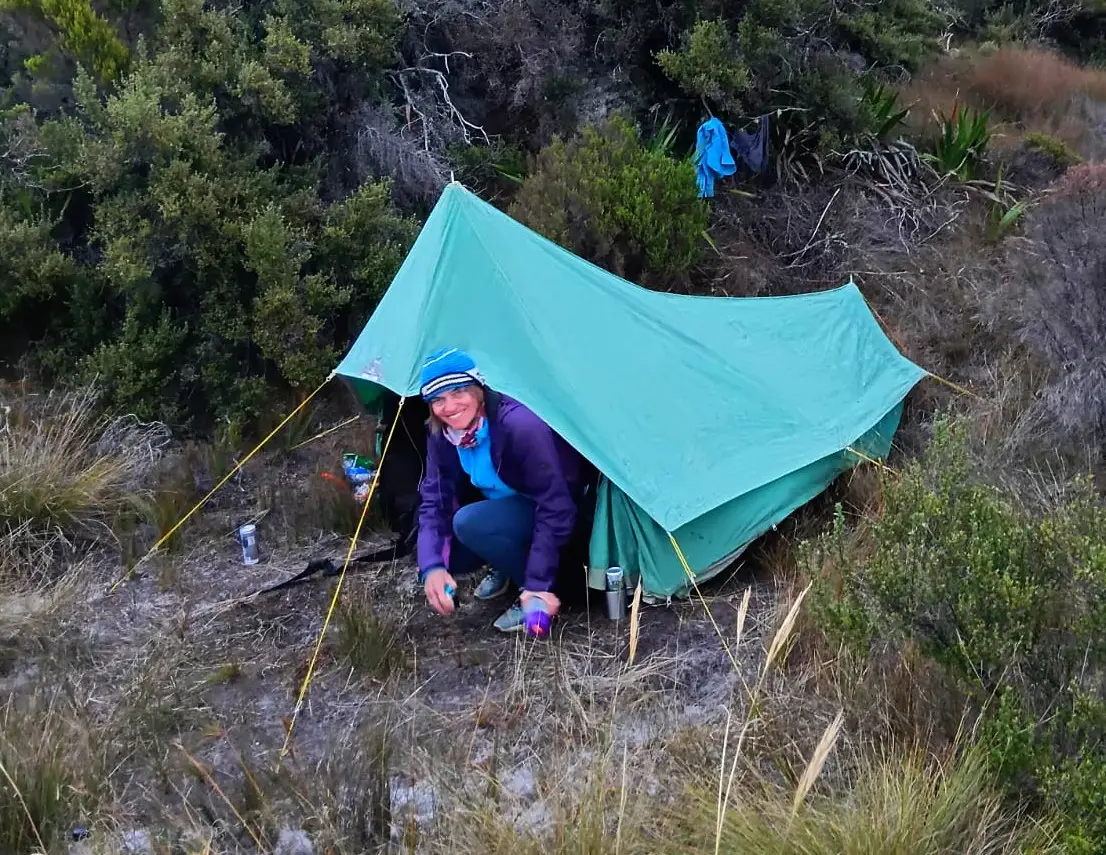
- Hiking tent: There are loads of lightweight and serviceable hiking tents on the market at the moment and even more on-line reviews. We rent out MSR single person tents at R150 per night, mostly because they weigh about 1.5kg and keep you out of the wind and the rain. Super lightweight and tarps tend not to do so well in our environment.
- Sleeping bag: Down sleeping bags are still the gold standard, they take up less room and keep you warmer that synthetics. Ensure that the bag you carry has a sub-zero Comfort rating. We are big fans of Hex Valley Down who are located on our route (where T4 crosses the N1 at De Doorns) and who will reuse your old down and customise your bag to fit. Another local provider is Rad Bag, their down ultra-light paired with their original bivvy bag and an inner makes for an adjustable solution.
- Plastic bag: Backpacks are not waterproof and rain covers are not foolproof. Having a sturdy bin bag (see-thru is handier) to stash your sleeping bag and warm gear at the bottom of your pack makes all sorts of sense. Dry bags are also an option.
- Water bottles: Be prepared to carry at least 3 liters of water. Your guides will tell you when to fill up to max and when there will be water along the way. For a dry overnight camp 3 liters is not excessive. Hydration (camel/platy) packs are useful in that they compress when empty, plastic soft drinks bottles are free and easy to refill as well as stuff into side pockets of your pack.
- Sleeping mat: The quality of your sleep or rest is important. Mats keep you warm and offer a degree of comfort to aching joints. Inflatables are smaller and lighter, foam mats are more durable. Pack foam mats vertically and ideally in a cover.
- Hiking stove and fuel: Each to their own, but most folk are using gas stoves that screw on and off the bottle easily. Jetboil type stoves where the pot has an integrated heat exchanger on the base use 50% less gas. Whichever stove you bring, you’ll probably need more than one 100g gas cannister per Traverse section, more like 200g. Try to purchase the 4-season propane/isobutane mix to ensure better burning in low temperatures at altitude.
- Crockery: mealtimes should be fun, don’t go forgetting your cooking pot, mug, bowl & cutlery.
- Head torch: look for long lasting over brightness. You want to see what you are doing rather than lighting up the hillside opposite. In camp pull it down to your neck so you can see what you eat without blinding others. Torches often manage to turn themselves on in your pack. Spare batteries or a power bank is your insurance.

Now what is true is that everybody has a different story. If there are significant gaps or errors in this outline we’d love to hear about it in the comments below.